Why US Museums Dropped Admission Barriers for 18-25s
Advertisements
Reducing US museum admission barriers can help young adults access cultural institutions through free admission, student discounts, educational partnerships, flexible pricing, and inclusive programming while supporting long-term audience development.
Reducing US museum admission barriers has become an important strategy for cultural institutions seeking to make art, history, science, and educational experiences more accessible.
Young adults between 18 and 25 may face financial challenges that influence their ability to participate in cultural activities while pursuing education or employment.
This guide explores existing admission policies, their potential benefits, funding strategies, and opportunities for increasing cultural participation among younger generations in the United States.
Understanding the shift toward accessible museum admission
American museums use different admission policies to balance cultural accessibility, educational responsibilities, operational expenses, and the financial requirements associated with maintaining their collections.
Reducing US museum admission barriers may involve complimentary tickets, discounted student admission, sponsored access programs, or flexible pricing arrangements available to eligible visitors.
However, these initiatives vary between institutions, and there is no verified nationwide policy granting universal free admission exclusively to visitors aged 18 to 25.
The rationale behind free admission

Admission charges can discourage cultural participation among individuals managing limited budgets, particularly students and young professionals balancing educational expenses, housing costs, and other responsibilities.
Reducing ticket prices or offering complimentary admission may encourage individuals to explore museums that they would otherwise consider financially inaccessible.
Efforts to reduce US museum admission barriers can also help institutions develop relationships with younger audiences without requiring an immediate financial commitment.
Why the 18-to-25 demographic matters
Young adulthood often involves significant transitions, including higher education, professional development, financial independence, and the formation of personal interests and long-term recreational habits.
Museum experiences during this period may encourage curiosity, provide educational opportunities, and introduce visitors to unfamiliar artistic, historical, and scientific perspectives.
Cultural institutions can support these experiences by recognizing the financial circumstances and practical requirements that influence participation among different groups of young adults.
Examples of accessible museum admission in the United States
Several prominent American cultural institutions already provide different opportunities for visitors to access collections through complimentary admission or reduced ticket prices.
These existing programs demonstrate that reducing US museum admission barriers does not necessarily require a single national policy targeting one specific age group.
Understanding individual institutional policies helps young adults identify opportunities appropriate to their location, educational status, and available financial resources.
The Smithsonian Institution
The Smithsonian Institution offers complimentary admission at its museums, with the exception of Cooper Hewitt, Smithsonian Design Museum in New York City.
Its Washington, DC, museums provide opportunities to explore subjects including natural history, aviation, American history, contemporary art, and diverse cultural traditions.
Some locations require advance or same-day entry passes, demonstrating that removing US museum admission barriers does not necessarily eliminate reservation requirements.
Museum of Fine Arts, Boston
The Museum of Fine Arts, Boston, provides complimentary admission opportunities for eligible students attending colleges and universities participating in its institutional membership programs.
Participants generally need to present valid identification demonstrating their affiliation with an eligible educational institution when requesting admission through the relevant program.
This approach illustrates how partnerships between museums and educational institutions can expand cultural accessibility without extending identical benefits to every young adult.
The Metropolitan Museum of Art
The Metropolitan Museum of Art offers pay-what-you-wish admission to New York State residents and eligible students from New York, New Jersey, and Connecticut.
Visitors using this arrangement must satisfy the museum's eligibility requirements and make a payment, meaning the policy is not technically unconditional free admission.
Flexible pricing represents another approach to reducing US museum admission barriers while allowing eligible visitors to determine their individual financial contributions.
Impact on museum attendance and engagement metrics
Admission policies can influence whether potential visitors decide to explore cultural institutions, particularly when ticket prices represent a significant portion of their recreational budgets.
However, attendance increases cannot automatically be attributed to free admission because exhibitions, marketing campaigns, seasonal tourism, and other circumstances may also influence visitor numbers.
Evaluating efforts to reduce US museum admission barriers requires reliable attendance records and clearly defined measurements of engagement among different visitor populations.
Measuring attendance among young adults
Museums can monitor visitor demographics through voluntary surveys, ticketing information, and other appropriate methods that respect individual privacy and applicable data protection requirements.
Comparing attendance before and after introducing an accessibility program may provide useful information when other relevant circumstances are considered during the evaluation.
Institutions should distinguish between first-time attendance, repeat visits, participation in educational activities, and other indicators that provide different perspectives on audience engagement.
Understanding the importance of repeat visits
Attracting first-time visitors represents only one aspect of audience development because long-term cultural participation also depends on whether individuals choose to return.
Rotating exhibitions, educational workshops, community events, and relevant programming may provide additional reasons for young adults to maintain relationships with cultural institutions.
Reducing US museum admission barriers may support repeat attendance when affordable entry is combined with meaningful experiences that reflect visitors' interests.
Shifting demographics and museum program development
Cultural institutions can use audience feedback to better understand the expectations, interests, and practical requirements of younger individuals participating in museum activities.
Programming decisions may incorporate contemporary artistic themes, interactive educational experiences, interdisciplinary exhibitions, and opportunities for visitors to contribute their own perspectives.
These initiatives complement efforts to reduce US museum admission barriers by addressing the quality and relevance of cultural experiences after visitors arrive.
Developing educational workshops for young adults
Hands-on workshops can provide opportunities for young visitors to explore artistic techniques, historical research, scientific concepts, and other topics connected to museum collections.
These activities may support learning through direct participation, allowing individuals to engage with cultural material beyond traditional exhibition labels and guided presentations.
Offering selected workshops at affordable prices can help extend accessibility, although participation may depend on available spaces, staffing, and program requirements.
Expanding digital content and interactive experiences
Digital exhibitions, virtual tours, online collection databases, and educational resources can provide additional opportunities for individuals who cannot regularly visit museums in person.
Interactive technologies may also complement physical exhibitions by offering accessible explanations, multimedia presentations, and different methods for exploring cultural or scientific information.
Digital resources can help address US museum admission barriers alongside geographic, transportation, scheduling, and other practical limitations affecting cultural participation.
Addressing financial sustainability and museum funding
Museums require financial resources to maintain collections, employ qualified staff, operate facilities, develop exhibitions, and provide educational experiences to their surrounding communities.
Reducing admission charges may influence institutional revenue, making it important to evaluate alternative funding arrangements and the actual financial impact of accessibility programs.
Long-term strategies for reducing US museum admission barriers must balance affordable cultural participation with the resources necessary to maintain institutional operations.
Philanthropy and private donations
Private donors and charitable foundations can support museum accessibility through financial contributions designated for educational activities, complimentary admission, and public engagement programs.
These arrangements may allow institutions to provide affordable experiences without relying exclusively on ticket sales from visitors participating in supported initiatives.
However, philanthropic support can fluctuate, making diversified funding and realistic financial planning important components of sustainable museum accessibility programs.
Government grants and institutional partnerships
Public funding and educational partnerships may help eligible cultural institutions finance selected activities involving community outreach, collection preservation, and broader public participation.
Universities and other educational organizations may also establish agreements that provide their students with access to participating museums through institutional membership arrangements.
Such partnerships can help reduce US museum admission barriers while strengthening connections between formal education and cultural experiences outside conventional classrooms.
Membership programs and alternative revenue sources
Museum memberships can provide recurring financial support while offering eligible members benefits such as admission privileges, exhibition access, and selected educational opportunities.
Institutions may also generate revenue through merchandise sales, special events, facility rentals, sponsored exhibitions, and other activities compatible with their organizational missions.
These additional resources can complement admission revenue, although their financial contribution varies according to institutional size, location, and visitor demand.
The broader cultural and societal implications
Access to cultural institutions may provide opportunities for individuals to explore historical events, artistic traditions, scientific discoveries, and different perspectives on contemporary society.
Museums can complement educational experiences by presenting original objects, visual materials, and interpretive resources that encourage curiosity and independent exploration.
Reducing US museum admission barriers may therefore contribute to broader cultural participation, particularly when additional social and practical obstacles are also addressed.
Fostering a lifelong interest in learning
Museum visits can introduce young adults to unfamiliar subjects and encourage independent exploration beyond the requirements of formal education or professional training.
Exposure to different collections may inspire individuals to develop new interests involving history, design, science, visual arts, conservation, or other cultural disciplines.
Although lifelong participation cannot be guaranteed, affordable museum experiences may provide a valuable starting point for continued personal and intellectual development.
Creative inspiration and career exploration
Young visitors may discover professional opportunities connected to exhibition design, historical research, conservation, archaeology, education, scientific communication, and cultural administration.
Educational events and interactions with museum professionals can provide additional context about the skills and qualifications associated with these different career pathways.
Reducing US museum admission barriers can make these exploratory experiences more accessible to individuals who may not have previously encountered such opportunities.
Challenges and opportunities for US museum networks
Expanding cultural accessibility may create operational challenges involving visitor capacity, staffing requirements, building maintenance, exhibition management, and the allocation of available financial resources.
Institutions must consider how increased participation could influence existing visitor services while ensuring that accessibility initiatives remain compatible with collection preservation requirements.
Addressing these challenges requires careful planning rather than assuming that removing ticket charges will automatically improve every aspect of museum operations.
Managing visitor capacity and museum resources
Popular exhibitions and special events can attract substantial attendance, potentially requiring reservation systems, additional staffing, and organized procedures for managing visitor movement.
Timed-entry arrangements may help museums distribute attendance across available periods, even when visitors are not required to purchase conventional admission tickets.
Reducing US museum admission barriers should therefore be accompanied by operational strategies that maintain safe, comfortable, and accessible experiences for all visitors.
Adapting to a younger audience
Museums can communicate with younger audiences through educational partnerships, relevant social media content, accessible event information, and community-centered cultural programming.
Collaborations with colleges, universities, and youth organizations may help institutions understand participation barriers and develop activities appropriate to different audience requirements.
These strategies can encourage cultural participation without assuming that every individual between 18 and 25 shares identical interests or communication preferences.
Other barriers affecting museum accessibility
Admission charges represent only one potential obstacle to cultural participation, since transportation, accessibility requirements, opening hours, and geographic distance may also influence museum visits.
Young adults working irregular schedules or attending educational institutions may find it difficult to visit museums during conventional weekday operating hours.
Addressing US museum admission barriers comprehensively requires considering these additional circumstances rather than concentrating exclusively on the price of admission tickets.
Transportation and geographic accessibility
Individuals living far from cultural institutions may encounter transportation expenses or limited public transit options, even when museum admission itself is available without charge.
Community partnerships, educational group visits, and accessible travel information may help reduce some practical difficulties associated with reaching cultural facilities.
Virtual collections can provide complementary opportunities for individuals whose geographic circumstances make regular in-person museum visits difficult or financially impractical.
Physical accessibility and inclusive visitor services
Cultural institutions should consider the requirements of visitors with disabilities through accessible facilities, appropriate communication resources, and available accommodations for different accessibility needs.
Providing clear information about entrances, elevators, accessible restrooms, sensory resources, and assistance services can help individuals prepare for their planned visits.
These measures complement efforts to reduce US museum admission barriers by addressing practical requirements that may otherwise prevent meaningful cultural participation.
Regional variations and collaborative efforts
Museum admission arrangements vary across the United States according to institutional missions, available financial support, community circumstances, and the characteristics of individual collections.
Some museums offer complimentary general admission throughout the year, while others provide student discounts, sponsored visits, or designated periods of reduced pricing.
These differences demonstrate why approaches to reducing US museum admission barriers should be evaluated according to individual institutions rather than generalized nationwide.
Supporting collaboration between cultural institutions
Museums may benefit from sharing educational resources, audience development strategies, research methods, and practical experiences involving the administration of cultural accessibility programs.
Collaborative initiatives can also provide opportunities to develop coordinated community outreach activities and strengthen relationships with local educational institutions and participating organizations.
However, collaboration does not necessarily establish a uniform national admission policy, because institutions retain different operational requirements and financial responsibilities.
How young adults can find affordable museum admission
Young visitors can explore available admission opportunities by reviewing official museum websites, educational institution benefits, and published information about sponsored cultural access programs.
Eligibility may depend on student status, residency, age, institutional affiliation, membership arrangements, or participation in specific community initiatives.
Understanding these requirements can help individuals overcome US museum admission barriers without relying on outdated information or unsupported claims about universal free entry.
Checking student eligibility and identification requirements
Students should investigate whether their college or university participates in museum membership programs or provides access to cultural activities through educational partnerships.
Some institutions require valid student identification or additional documentation before providing discounted admission, complimentary tickets, or access to selected educational events.
Confirm the eligibility conditions before visiting, particularly when discounts are limited to participating schools, specific geographic regions, or particular categories of students.
Finding free admission days and special events
Museums may organize designated free admission periods, community celebrations, educational events, or sponsored programs that provide additional opportunities for affordable cultural participation.
Availability can vary throughout the year, and some activities may require advance registration or operate according to limited attendance capacities.
Checking event schedules and official admission information helps visitors identify practical opportunities to reduce US museum admission barriers when planning cultural activities.
Future outlook: Sustaining youth engagement in museums
Long-term youth engagement requires cultural institutions to provide accessible experiences that remain relevant, educational, welcoming, and financially sustainable beyond individual promotional initiatives.
Affordable admission can encourage initial participation, while thoughtful programming and meaningful exhibitions may provide additional reasons for visitors to return over time.
The future of efforts to reduce US museum admission barriers will depend on institutional resources, community engagement, ongoing evaluation, and changing audience requirements.
Evaluating the long-term success of accessibility programs
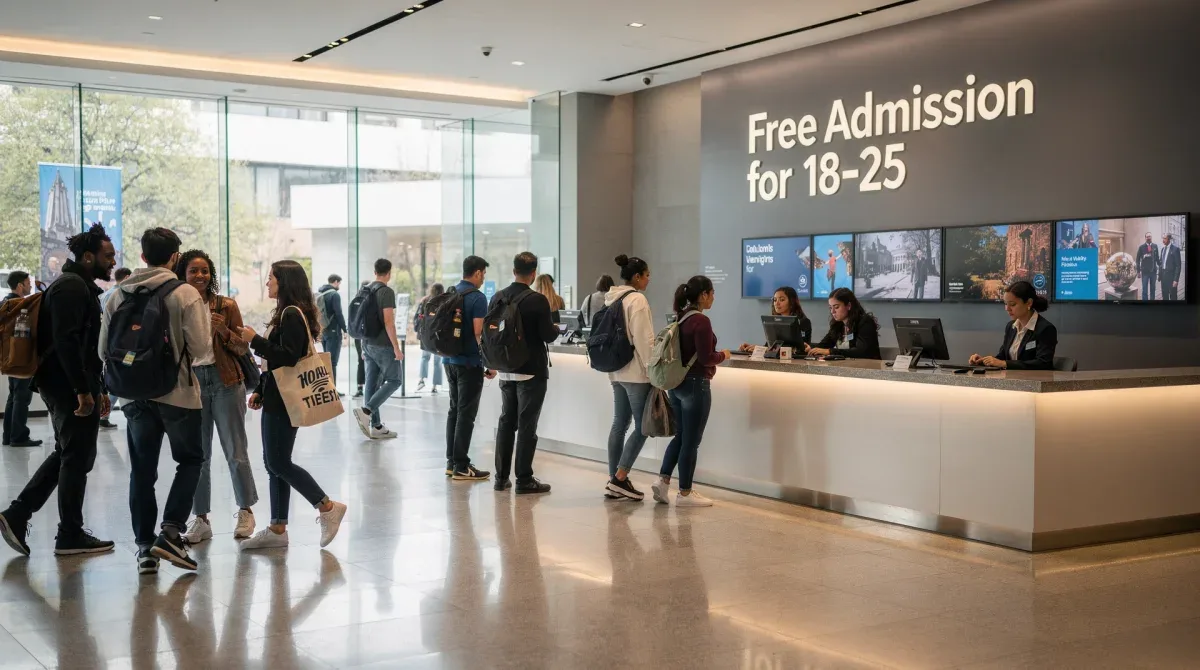
Institutions can assess accessibility initiatives by monitoring attendance, repeat visits, educational participation, visitor satisfaction, financial performance, and feedback from participating community members.
These measurements may help identify whether specific programs are reaching their intended audiences and whether additional operational improvements could support greater participation.
Reliable evaluation should distinguish verified outcomes from anticipated benefits instead of presenting every complimentary admission initiative as an established institutional success.
Summary of US museum admission barriers and accessibility programs
American museums provide different opportunities for cultural participation through complimentary admission, flexible pricing, educational partnerships, and programs designed to support specific visitor populations.
Young adults can benefit from these arrangements when they satisfy the applicable eligibility requirements and understand any reservation or documentation procedures.
The following table summarizes important strategies and considerations associated with improving museum accessibility and encouraging long-term cultural participation in the United States.
Key Point | Brief Description |
|---|---|
Admission Policies | Free and discounted admission arrangements vary between American cultural institutions. |
Smithsonian Institution | Most Smithsonian museums offer complimentary admission to visitors of all ages, although some require entry passes. |
Museum of Fine Arts, Boston | Offers complimentary admission to eligible students from participating educational institutions. |
Metropolitan Museum of Art | Provides pay-what-you-wish admission to eligible residents and students. |
Primary Goal | Expand cultural accessibility and encourage meaningful participation among different visitor populations. |
Youth Engagement | Educational workshops, interactive exhibitions, and relevant programming may encourage continued participation. |
Funding Impact | Philanthropy, grants, memberships, and partnerships may help support affordable admission programs. |
Regional Differences | Admission requirements depend on individual institutions, geographic eligibility, and available resources. |
Additional Barriers | Transportation costs, opening hours, geographic distance, and accessibility requirements can influence participation. |
Future Outlook | Sustainable cultural participation requires effective programming, reliable funding, and continuous evaluation. |
Frequently Asked Questions About US Museum Admission Barriers
Why do American museums offer free admission to young adults?
Some institutions offer complimentary or discounted admission to reduce financial obstacles, support educational experiences, and encourage cultural participation among younger visitors.
Are all US museums free for people aged 18 to 25?
No. Admission requirements vary by institution. Some museums provide universal free entry, while others offer discounts based on age, residency, student status, or institutional affiliation.
Are Smithsonian museums free for young adults?
Most Smithsonian museums offer free general admission regardless of age. Cooper Hewitt in New York City is an exception, and some locations require entry passes.
How do student museum discounts work?
Eligible students may receive discounted or complimentary admission by presenting valid identification and satisfying the requirements associated with individual museum programs.
Does pay-what-you-wish admission mean free entry?
Not necessarily. Some institutions require a minimum payment, even when eligible visitors can determine the amount they wish to contribute.
Can international students receive discounted museum admission?
Eligibility depends on the individual institution. Some programs accept international student identification, while others require enrollment at participating educational institutions or residence in designated areas.
How does free admission affect museum funding?
Reducing ticket revenue may require additional support through donations, grants, memberships, sponsorships, and other funding arrangements. The financial impact varies between institutions.
Does complimentary museum admission include special exhibitions?
Not always. Certain exhibitions, workshops, and special events may require separate tickets or advance reservations even when general museum admission is free.
What benefits can result from reducing US museum admission barriers?
Potential benefits include broader cultural participation, increased educational opportunities, and stronger relationships between museums and local communities. Actual outcomes depend on program effectiveness.
Do free admission programs guarantee increased museum attendance?
No. Attendance is influenced by transportation, exhibition quality, opening hours, visitor preferences, publicity, and other circumstances beyond ticket pricing.
Can young adults visit museums for free without being students?
Yes, at institutions offering universal complimentary admission or other programs that do not require student status. Always confirm the applicable admission policy.
How are museums encouraging younger visitors to return?
Institutions may offer rotating exhibitions, educational workshops, digital experiences, community events, and collaborative programs designed to encourage continued cultural engagement.
Where can I find reliable information about museum admission policies?
Official museum websites provide information about ticket prices, complimentary admission opportunities, student discounts, reservation requirements, and eligibility conditions.
Conclusion: Building a more accessible cultural future
Reducing US museum admission barriers can create valuable opportunities for young adults to explore art, history, science, and other subjects through meaningful cultural experiences.
Although admission policies differ across American institutions, educational partnerships, affordable tickets, and inclusive programming can contribute to broader participation when supported by appropriate resources.
Combining accessible admission with sustainable funding, thoughtful visitor services, and reliable evaluation can help museums develop lasting relationships with future generations of cultural participants.