Documentary Storytelling in 2026: True Mystery's Network Shift
Advertisements
Documentary storytelling in 2026 is evolving as broadcasters and streaming platforms invest in true mystery, investigative journalism, and real-life crime stories. Explore changing commissioning priorities, audience preferences, production technologies, and the evidence behind industry growth claims.
Documentary storytelling in 2026 is attracting renewed attention as television networks and streaming platforms explore compelling investigations, unresolved cases, and real-life mysteries.
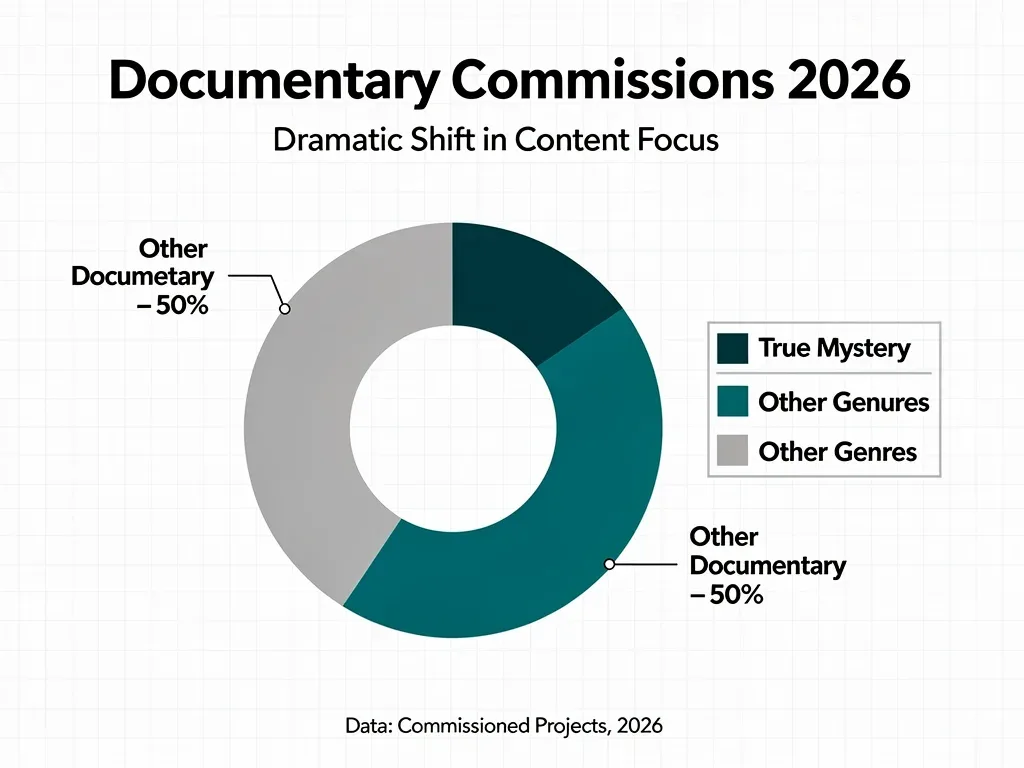
The growing visibility of true crime has encouraged discussions about commissioning priorities and audience engagement. However, claims about three networks allocating 50% of commissions remain unverified.
Understanding the industry's direction requires examining documented trends, creative opportunities, and ethical responsibilities. This guide explores how true mystery is influencing modern factual entertainment.
The Shift in Documentary Storytelling in 2026
True mystery and investigative documentaries remain important parts of factual television programming. Broadcasters continue developing stories built around investigations, testimony, and unanswered questions.
Industry analysis has identified consistent demand for true crime programming across major international markets. However, individual broadcasters maintain different commissioning strategies and programming priorities.
The broader development of documentary storytelling in 2026 reflects competition for audience attention, changing distribution methods, and continued interest in carefully researched narratives.
What Industry Data Actually Shows

Research reported by C21Media, citing Ampere Analysis, found that true crime accounted for approximately 16% of worldwide documentary commissions in 2025.
The analysis tracked 632 new crime documentary commissions across 22 major media markets. This demonstrates the genre's established presence within factual entertainment.
However, these figures do not establish that three American networks committed half of their 2026 documentary budgets to true mystery. That specific claim remains unsupported.
Driving Forces Behind the True Mystery Boom
True mystery documentaries often attract interest through compelling questions, complex investigations, and stories involving unresolved events. These elements encourage viewers to follow developments.
The expansion of streaming platforms has also introduced additional distribution possibilities for serialized factual storytelling and documentary collections.
Social media discussions can extend engagement beyond individual episodes. However, audience interest varies considerably depending on the subject, presentation, and credibility of each production.
Why Real-Life Mysteries Attract Audiences
Unresolved questions create narrative tension because viewers want to understand what happened and why. This curiosity can encourage continued attention throughout a documentary.
Interviews, archival records, and investigative findings provide opportunities to examine different perspectives. Effective storytelling helps viewers distinguish documented information from uncertain interpretations.
For some audiences, interest also reflects concerns about justice and accountability. Responsible producers must balance this curiosity with respect for affected individuals.
Network Strategies and Commissioning Priorities
Television commissioners evaluate documentary proposals according to audience relevance, production quality, costs, and distribution potential. These factors influence which projects receive support.
Investigative documentaries may appeal to networks seeking distinctive factual programming, particularly when producers can demonstrate reliable access to original sources and evidence.
However, commissioning strategies vary across organizations and markets. There is no verified basis for describing a coordinated 50% shift among three unnamed American networks.
What Broadcasters Look for in Documentary Pitches
Strong documentary proposals usually begin with a clear central question and a compelling reason for audiences to care. Original research can strengthen a project's appeal.
Commissioners also consider access to participants, legal risks, available footage, and production feasibility. A dramatic premise alone does not establish editorial credibility.
Producers should communicate what is confirmed, what remains uncertain, and how their investigation will proceed. These details support realistic development discussions.
The Importance of Original Investigations
Investigative documentaries benefit from research that adds meaningful context rather than repeating familiar claims. Primary documents and reliable testimony can strengthen a production.
New reporting may uncover overlooked perspectives or clarify disputed information. However, filmmakers must avoid promising revelations that their evidence cannot support.
Credible investigations depend on verification, transparency, and appropriate editorial review. These practices help distinguish responsible factual storytelling from sensational entertainment.
Impact on Independent Producers and Content Creators
Independent producers may find opportunities in documentaries that combine strong research with distinctive storytelling. Broadcasters and distributors continue evaluating projects across different formats.
However, competition can be demanding, especially when production requires extensive archival research, legal review, or access to participants involved in sensitive events.
Creators can strengthen proposals by developing reporting partnerships and demonstrating editorial responsibility. Original perspectives are valuable when supported by credible investigation.
Audience Reception and Market Dynamics
Audience behavior influences how factual programming is developed, promoted, and distributed. Producers examine viewing patterns to understand which stories encourage sustained engagement.
True mystery documentaries can attract attention through narrative suspense, but their success is not guaranteed. Viewer interest depends on execution and relevance.
In documentary storytelling in 2026, networks must balance recognizable genres with original storytelling. Excessive repetition can limit the appeal of otherwise compelling subjects.
Streaming Platforms and Viewer Engagement
Streaming services allow viewers to watch documentaries on demand and explore related productions. This accessibility can support both standalone films and multi-episode investigations.
Serialized documentaries may encourage audiences to continue following complex cases. However, episode length and narrative structure should match the available evidence.
Platforms also compete through exclusive content and recognizable documentary brands. Producers must consider distribution requirements alongside editorial and creative goals.
The Role of Social Media Discussions
Online conversations can increase awareness of documentary releases and encourage audiences to discuss unresolved questions. These discussions sometimes introduce additional perspectives.
However, speculation on social platforms can spread misleading claims about real people. Producers should distinguish audience theories from documented investigative findings.
Responsible engagement involves presenting clear evidence and avoiding unsupported accusations. This helps protect the credibility of documentaries and the people connected to their subjects.
Avoiding Audience Fatigue
Repeated documentary formats may become less distinctive when viewers encounter similar narratives. Original research and varied storytelling approaches can help maintain interest.
Filmmakers may explore different historical periods, communities, or investigative methods instead of relying exclusively on familiar crime cases and dramatic reconstructions.
Networks should also evaluate whether each project offers meaningful information. Strong storytelling depends on editorial substance rather than suspense alone.
Challenges and Ethical Considerations
True mystery documentaries frequently examine events involving loss, trauma, disputed allegations, and sensitive personal information. These subjects require careful editorial judgment.
Filmmakers must consider the potential consequences of publication for victims, relatives, witnesses, and other participants. Commercial interest should not override responsible reporting.
Professional standards help maintain trust by emphasizing verification, context, and fairness. Ethical decisions should remain central throughout documentary development and distribution.
Protecting Victims and Their Families
Documentary producers should approach affected individuals with sensitivity and provide clear explanations of participation. Interviews may involve difficult memories or personal circumstances.
Respecting boundaries and obtaining appropriate permissions can reduce unnecessary harm. Consent should be informed, and participants should understand how recorded material may be used.
Not every private detail contributes meaningful information to a documentary. Editorial teams should carefully assess whether disclosure serves a legitimate public interest.
Separating Facts From Speculation
Mystery narratives often include competing explanations, incomplete records, and conflicting testimony. These uncertainties should be presented accurately rather than resolved through unsupported assumptions.
Visual reconstructions and dramatic narration can make stories easier to follow, but they should not imply that imagined events have been independently verified.
Clear attribution and careful language help audiences recognize the limits of available evidence. These practices preserve credibility while allowing complex stories to remain engaging.
Maintaining Journalistic Integrity
Investigative documentaries should rely on reliable sources, appropriate fact-checking, and legal review where necessary. Editorial independence helps prevent misleading or distorted conclusions.
The principles of documentary storytelling support clear narratives without requiring creators to exaggerate evidence or manufacture suspense.
Accuracy can itself create compelling drama when investigations are presented carefully. Audiences benefit from understanding both confirmed findings and outstanding uncertainties.
Technological Advancements and Investigative Storytelling
Digital technologies provide documentary teams with new ways to organize information and present complex investigations. These tools can support research, visualization, and production.
However, technology does not automatically make a documentary more accurate. Editorial oversight remains necessary when presenting analytical findings or digitally generated material.
The most valuable innovations improve clarity while preserving the distinction between evidence and illustration. Responsible implementation should remain a priority for producers.
Digital Reconstruction and Forensic Visualization
Digital reconstructions can help explain locations, timelines, and physical relationships within an investigation. Their usefulness depends on the quality of available source material.
Three-dimensional models may make complicated information easier to understand, particularly when viewers need context about environments or sequences of events.
Nevertheless, reconstructions should be identified as illustrative when they contain assumptions. They must not be presented as direct recordings of events that were never filmed.
Artificial Intelligence in Documentary Research
Artificial intelligence can assist researchers with transcription, document classification, and the organization of large information collections.
These applications may reduce time spent on repetitive tasks, but automated systems can produce mistakes or inaccurate interpretations. Human verification remains essential.
Producers should also consider privacy, copyright, and source confidentiality. Sensitive documents require appropriate safeguards when processed through external technological services.
Virtual and Augmented Reality Experiences
Virtual reality and augmented reality can offer interactive ways to present historical environments, reconstructed locations, and educational explanations.
These formats may help viewers explore complex material from different perspectives. However, their production costs and technical requirements can limit adoption.
Immersive experiences should clearly distinguish documented evidence from creative reconstruction. Greater visual realism must not create misleading impressions of factual certainty.
New Formats and Distribution Channels
True mystery documentaries can appear as feature-length films, limited series, television specials, and digital productions. The appropriate format depends on the story.
Streaming services and traditional broadcasters may favor different release strategies according to audience habits and commercial objectives. Multi-platform distribution introduces further possibilities.
For independent creators, understanding these formats helps align proposals with potential buyers. Editorial depth remains important regardless of the distribution channel.
Limited Series and Feature-Length Documentaries
Limited series provide room for investigations involving multiple participants, timelines, or unanswered questions. However, not every subject requires several episodes.
Feature-length documentaries may be better suited to focused investigations with a clear narrative structure. Their shorter format can encourage concise storytelling.
Producers should choose the length that best serves the evidence. Expanding a simple case unnecessarily may weaken both audience engagement and editorial quality.
Podcast Adaptations and Cross-Platform Storytelling
Investigative podcasts have demonstrated how audio storytelling can sustain interest in complex real-life events. Their structure sometimes lends itself to visual adaptation.
However, television documentaries require additional visual material, permissions, and production planning. A successful podcast does not automatically translate into an effective screen production.
Cross-platform projects benefit from adapting the storytelling method to each medium. Original reporting and ethical standards should remain consistent across different formats.
Multi-Platform Documentary Releases
Documentary distributors may use television, streaming, festivals, and digital platforms to reach different audiences. Each channel offers distinct promotional and commercial possibilities.
Release strategies depend on licensing agreements, geographic rights, and the expectations of commissioning partners. Not every project can appear simultaneously across platforms.
Understanding distribution conditions early can help producers plan budgets and marketing. Clear agreements also reduce complications surrounding ownership and future availability.
The Future Landscape of Factual Entertainment
The documentary industry continues adapting to changing audience habits and competition between content providers. True mystery remains one established category within this broader environment.
Although demand creates opportunities for investigative producers, funding priorities differ across broadcasters. Growth in one genre does not automatically indicate uniform investment increases.
The long-term direction of documentary storytelling in 2026 will depend on programming strategies, production economics, and the quality of new projects.
Investment and Economic Implications
Investigative documentaries may require substantial resources for research, archival licensing, travel, legal review, and production. These costs influence commissioning decisions.
Increased investment in particular projects can create opportunities for journalists, editors, researchers, and other specialists. However, spending varies considerably between productions.
Without verified commissioning figures, it would be misleading to predict an industry-wide financial expansion based on the claimed 50% shift among unnamed networks.
Demand for Specialized Documentary Talent
Complex investigative productions benefit from professionals experienced in research, evidence verification, and sensitive interviewing. Their knowledge can improve accuracy and editorial reliability.
Digital specialists may also contribute through archival organization, mapping, data visualization, and technical production. These roles complement traditional documentary filmmaking skills.
Collaborative teams can provide perspectives that individual creators may lack. The appropriate expertise depends on the subject, available evidence, and production requirements.
Balancing True Mystery With Other Documentary Genres
Factual entertainment includes science, history, environmental reporting, social issues, arts, and many other subjects. Different audiences seek different documentary experiences.
Concentrating heavily on a single genre could create competition for specialized resources. However, actual outcomes depend on documented network budgets and commissioning policies.
A varied documentary landscape supports a wider range of stories and perspectives. This diversity remains important alongside continued interest in real-life mysteries.
Global Trends and Local Adaptations
True crime documentaries are produced and distributed internationally, but audience preferences differ between markets. Local history, cultural context, and legal conditions influence storytelling.
International productions may reach broader audiences when their investigations explain unfamiliar institutions and circumstances clearly. Localization requires more than translating dialogue.
Producers should examine regional sensitivities and reporting standards before adapting stories. Accurate context is essential when presenting events to viewers unfamiliar with their origins.
Differences Between International Markets
Broadcasters in different countries operate under distinct financial structures and regulatory frameworks. These conditions influence which documentary projects receive approval.
Audience interest in particular cases may also depend on local relevance. Events familiar within one country can require additional explanation for international viewers.
Successful distribution therefore involves appropriate research and presentation. A universally understandable theme does not eliminate the importance of regional context.
Local Stories With Broader Appeal
Investigations involving justice, accountability, and unresolved questions may interest audiences beyond their original locations. Their broader appeal depends on clear factual storytelling.
Local journalists and researchers can provide historical knowledge that outside production teams may lack. Collaboration may help prevent inaccurate or oversimplified portrayals.
Documentaries become more meaningful when individual stories are presented within their proper context. This supports both narrative accessibility and respect for communities.
International Co-Productions
Cross-border documentary partnerships can combine funding, research capabilities, and distribution experience. However, they also require coordination around rights and editorial standards.
Different legal systems may impose distinct obligations regarding privacy, defamation, and access to records. Production agreements should account for these differences.
Clear responsibilities and communication can support successful collaborations. International reach should not come at the expense of accuracy or the rights of participants.
Anticipating Viewer Preferences and Content Evolution
Documentary producers increasingly consider how audiences discover content and respond to different storytelling formats. Viewing behavior offers useful information about engagement.
However, popularity does not automatically demonstrate accuracy or public value. Producers must distinguish commercial performance from the quality of investigative reporting.
The future of true mystery will depend on stories that offer original insight and responsible presentation. Technology and distribution strategies can support these goals.
What Audiences May Expect From New Documentaries
Viewers may appreciate clear evidence, compelling interviews, and narratives that avoid unnecessary repetition. These characteristics can support both understanding and engagement.
Some audiences also seek transparency about disputed information and unanswered questions. Explicitly acknowledging uncertainty can strengthen the credibility of an investigation.
Documentary makers should avoid assuming that suspense alone guarantees success. Strong research and thoughtful storytelling remain central to a meaningful viewing experience.
How Viewer Feedback Influences Production
Audience responses can help distributors understand pacing, accessibility, and general interest in documentary subjects. However, feedback must be interpreted within its context.
Social media discussions may highlight questions that viewers found unclear. They can also introduce unsupported speculation that should not influence factual conclusions.
Producers can use feedback to improve communication and presentation while preserving editorial independence. Accuracy should remain the priority even when dramatic claims attract attention.
Why Ethical Storytelling Will Remain Essential
Investigative documentaries deal with real people whose lives may be affected by renewed publicity. Ethical decisions therefore extend beyond the editing process.
Clear sourcing, respectful interviews, and responsible use of archival material help reduce unnecessary harm. These standards also strengthen audience confidence.
As new formats emerge, the underlying responsibilities remain consistent. Documentary innovation should improve understanding rather than amplify unsupported accusations or sensationalism.
Documentary Storytelling in 2026: Key Takeaways
True mystery continues to occupy an important place within factual entertainment, supported by audience interest and documented commissioning activity across different markets.
However, the specific claim involving three American networks and a 50% allocation remains unverified. Industry analysis supports a more measured assessment of the genre.
The following table summarizes the major developments and limitations discussed. It distinguishes established industry observations from claims that require additional sourcing.
Key Point | Brief Description |
|---|---|
Network Shift | The claimed 50% allocation by three major networks is unverified; true crime represented approximately 16% of worldwide documentary commissions in 2025. |
Industry Impact | True mystery remains an established commissioning category, creating opportunities for investigative producers and specialized talent. |
Audience Demand | Interest in unresolved cases, investigations, and evidence-based narratives supports the genre's continuing visibility. |
Ethical Focus | Responsible reporting requires verification, sensitivity toward affected individuals, and clear distinctions between facts and speculation. |
Frequently Asked Questions About True Mystery Documentaries in 2026
Why are networks shifting to true mystery documentaries in 2026?
True mystery remains appealing because unresolved investigations and compelling real-life stories can attract viewers. However, commissioning priorities differ between broadcasters, and a coordinated 50% allocation by three major networks has not been verified.
Which networks are making this shift?
No three American networks have been reliably identified as committing 50% of their 2026 documentary commissions to true mystery. Individual broadcasters continue announcing investigative projects, but those announcements do not establish the claimed coordinated shift.
What does this mean for independent documentary filmmakers?
Independent filmmakers may find opportunities in investigative documentaries supported by strong research and original access. However, competition remains significant, and producers should confirm actual commissioning requirements rather than rely on unsupported industry statistics.
Are there ethical concerns with this focus on true mystery?
Yes. Investigative documentaries can involve sensitive allegations, victims, and traumatic experiences. Responsible productions should prioritize accurate sourcing, respect for participants, appropriate legal review, and clear distinctions between established evidence and speculation.
How will technology impact these new true mystery commissions?
Digital reconstruction, data analysis, transcription, and visualization tools can support investigative research and storytelling. However, automated findings and reconstructed scenes require human verification, transparency, and appropriate safeguards against misleading presentations.
What This Means for Documentary Storytelling in 2026
Documentary storytelling in 2026 continues evolving as creators explore investigative formats, digital technology, and different distribution strategies. True mystery remains a significant part of that landscape.
However, claims about large commissioning shifts should be supported by identifiable research and network announcements. The available evidence does not substantiate the reported 50% allocation.
For producers and viewers, the strongest developments involve original investigations, responsible reporting, and compelling presentation. These qualities will remain central to meaningful factual entertainment.