Pop Music Royalty Models Shift: 1,000-Play Threshold Impact
Advertisements
The music streaming royalty threshold has become an important consideration for independent musicians, record labels, and music distributors. Changes to streaming royalty calculations have created new questions about how artists qualify for payments and what smaller creators can do to develop sustainable income.
The Pop Music Royalty Models Shift reflects a broader discussion about fair compensation, artificial streaming, and the distribution of revenue generated by digital music services.
In April 2024, Spotify introduced a requirement for tracks to receive at least 1,000 streams during the previous 12 months to qualify for recorded music royalties. Other streaming platforms use different systems, making it essential to understand the specific rules rather than assuming a universal industry standard.
Understanding the 1,000-Play Threshold Implementation
The music streaming royalty threshold implemented by Spotify applies to individual tracks and determines whether they qualify for a share of the platform's recorded music royalty pool.
Under this policy, songs must accumulate at least 1,000 eligible streams during the preceding 12 months. The requirement is evaluated on a rolling basis, meaning that the relevant period changes over time.
This policy does not mean that every streaming service requires the same number of plays. Different platforms use their own royalty models, and the Spotify threshold does not directly determine eligibility for publishing royalties associated with songwriting and composition.
The Rationale Behind the Change
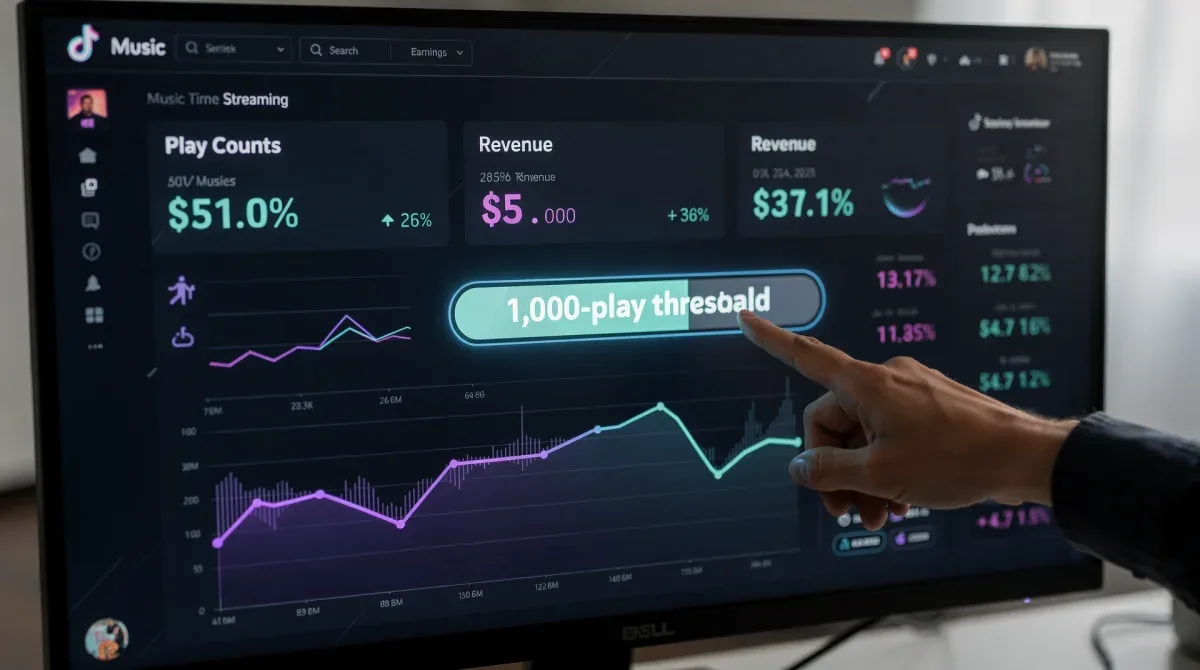
Spotify introduced its updated eligibility model partly to redirect small royalty amounts from tracks with very limited engagement toward recordings that meet its annual streaming requirement.
According to the platform, many recordings previously generated only a few cents annually, often remaining below the withdrawal thresholds established by distributors and other intermediaries.
The music streaming royalty threshold is also intended to discourage certain forms of manipulation involving large numbers of low-engagement tracks, although artificial streaming is addressed through additional detection and enforcement policies.
Royalty Distribution: Redirecting revenue from recordings below the eligibility threshold.
Artificial Streaming: Reducing incentives for certain types of manipulation.
Payment Efficiency: Addressing extremely small royalty amounts that may never reach creators.
Recording Eligibility: Applying the requirement to recorded music royalties rather than all music rights.
Impact on Emerging and Independent Artists
Independent musicians often begin their careers with limited audiences, making the music streaming royalty threshold particularly relevant during the early stages of releasing music.
A recording that receives fewer than 1,000 streams within Spotify's rolling 12-month period does not qualify for a share of its recorded music royalty pool under the current eligibility rule.
However, missing the threshold does not remove the recording from the platform automatically or prevent the artist from earning eligible revenue through other services, direct sales, performances, or different forms of licensing.
Strategies for Adapting to the New Model
Artists can respond to changing streaming economics by developing an identifiable audience, maintaining consistent communication with listeners, and planning releases according to their available resources.
Building relationships with existing fans may be more sustainable than focusing exclusively on obtaining large numbers of one-time streams through expensive promotional campaigns.
When evaluating the music streaming royalty threshold, independent musicians should also compare distribution costs, promotional expenses, audience engagement, and alternative revenue opportunities instead of treating streaming eligibility as their only financial objective.
Audience Development: Encourage genuine discovery and repeat listening.
Release Planning: Establish realistic promotional goals for each recording.
Direct Revenue: Explore merchandise, performances, and music sales.
Performance Analytics: Use legitimate listener data to guide promotional decisions.
Implications for Established Artists and Major Labels
The music streaming royalty threshold also has implications for established musicians and companies that manage large recording catalogs, particularly when older tracks generate limited listening activity.
Recordings that consistently exceed Spotify's annual eligibility requirement remain included in the relevant royalty calculation, while less frequently streamed tracks may fall below the threshold.
Major labels and independent rights holders can benefit from understanding how different recordings contribute to their overall revenue, but financial outcomes depend on ownership arrangements, listening activity, contractual terms, and platform-specific rules.
The Broader Economic Landscape of Streaming
Music streaming revenue is generally distributed according to agreements between platforms and rights holders, with payments influenced by factors such as subscription revenue, advertising income, and the proportion of eligible streams.
Spotify does not pay a universal fixed amount for every play. Its recorded music royalties are calculated using a streamshare model, with the resulting revenue distributed to rights holders according to applicable agreements.
The music streaming royalty threshold changes which recordings participate in that calculation, but it does not automatically determine how much money the performing artist receives from a label or distributor.
Reactions from Industry Stakeholders
The streaming royalty changes have generated debate because platforms, rights holders, distributors, and independent musicians may evaluate the same policy from different financial perspectives.
Supporters emphasize the potential benefit of redistributing extremely small royalty amounts and discouraging certain practices involving artificial or manipulated listening activity.
Critics argue that the music streaming royalty threshold can disadvantage niche recordings, experimental releases, and musicians who attract genuine but relatively small audiences, raising questions about fairness and cultural diversity.
The Role of Data and Analytics for Artists
Streaming analytics can help artists understand which recordings attract listeners, where audiences are located, and whether promotional activities lead to meaningful engagement.
For musicians monitoring the music streaming royalty threshold, it is important to distinguish total lifetime streams from activity within the relevant 12-month eligibility period.
Artists should also examine distributor statements and rights-holder reports, since the number of streams shown in a dashboard does not automatically equal a final royalty payment or indicate that all listening activity is eligible.
Future Outlook: What's Next for Music Royalties?

The future of music royalties will likely involve continued discussion about artist compensation, content authentication, artificial streaming, and the economic relationship between platforms and rights holders.
Some services have introduced artist-centric remuneration approaches, while others rely on different distribution methods. These models should be compared individually rather than described as a single industry-wide policy.
Although technologies such as blockchain technology are sometimes discussed as potential tools for rights management and transparent transactions, their adoption does not automatically eliminate contractual intermediaries or guarantee higher royalty payments.
The Consumer's Role in the New Ecosystem
Listeners influence music discovery through genuine streaming activity, recommendations, playlists, and direct engagement with artists whose work they appreciate.
However, the music streaming royalty threshold should not encourage artificial listening or attempts to manipulate platform measurements, as suspicious activity can result in withheld royalties or additional enforcement actions.
Fans who want to support independent musicians can also consider purchasing music, attending live shows, buying official merchandise, or using legitimate direct-support options provided by artists.
Key Point | Brief Description |
|---|---|
Threshold Introduction | Since April 2024, Spotify has required at least 1,000 streams in the previous 12 months for a track to qualify for recorded music royalties. |
Impact on Artists | Recordings below the Spotify threshold do not participate in its recorded music royalty pool, potentially affecting smaller releases. |
Industry Rationale | Spotify says the policy redirects small royalty amounts to eligible recordings and helps address certain forms of streaming manipulation. |
Future Adaptations | Artists can focus on genuine audience development, review analytics, and diversify revenue beyond streaming. |
Frequently Asked Questions About Music Royalty Thresholds
What is the new 1,000-play threshold for streaming royalties?▼
The music streaming royalty threshold used by Spotify requires individual tracks to receive at least 1,000 streams during the previous 12 months to qualify for recorded music royalty calculations. The policy took effect in April 2024. It is not a universal requirement across all streaming platforms and does not change the calculation of publishing royalties.
How does this impact independent and emerging artists?▼
Independent musicians with recordings below Spotify's annual threshold may not receive recorded music royalties from those tracks through that platform. However, they may still earn revenue from other eligible recordings, different streaming services, direct music sales, performances, and other legitimate activities.
Why did streaming platforms implement this change?▼
Spotify says its threshold was introduced to redirect extremely small royalty amounts toward tracks with greater listening activity and reduce incentives for certain forms of streaming manipulation. Other platforms have adopted different artist remuneration models, so their motivations and eligibility criteria should be evaluated separately.
What strategies can artists use to adapt to the new model?▼
Artists can build genuine audiences, improve release planning, evaluate legitimate streaming analytics, establish direct relationships with fans, and diversify income through performances, merchandise, and music sales. They should avoid artificial streaming services that promise guaranteed listening numbers or manipulate engagement.
Will this change affect the diversity of music available on streaming platforms?▼
The music streaming royalty threshold raises concerns about whether low-volume and niche recordings can generate meaningful income. However, its long-term effects on musical diversity are not fully established. Eligibility rules influence revenue distribution but do not automatically determine which recordings remain available on a streaming platform.
Looking Ahead
The Pop Music Royalty Models Shift: What Streaming Platforms' New 1,000-Play Threshold Means for Creators reflects an ongoing debate about how digital music revenue should be distributed among recordings with different levels of audience engagement.
The music streaming royalty threshold established by Spotify has a specific scope and should not be confused with every streaming platform's payment system or with the separate rights associated with musical compositions.
As royalty models evolve, independent artists and established rights holders will benefit from understanding platform policies, reviewing reliable payment information, and developing sustainable relationships with listeners beyond individual streaming metrics.
The official Spotify for Artists royalty guide provides further information about how the platform calculates recording royalties, establishes eligibility, and distributes payments to rights holders.