2026 Streaming Bundles: Save 35% on Entertainment
Advertisements
2026 Streaming Bundles offer American households opportunities to reduce entertainment subscription expenses by combining popular platforms at discounted prices, with selected packages providing savings exceeding 35% compared with equivalent standalone monthly subscriptions.
The 2026 Streaming Bundles available in the United States offer practical alternatives for households seeking to reduce monthly entertainment expenses without sacrificing their preferred content.
Combining multiple streaming platforms through discounted subscription packages can help viewers access movies, television series, documentaries, and selected sporting events while managing their entertainment budgets.
Although some available packages provide savings exceeding 35%, actual financial benefits depend on subscription tiers, viewing preferences, eligibility requirements, and existing promotional arrangements.
Understanding the Shift to 2026 Streaming Bundles
Streaming bundles combine multiple entertainment services within a coordinated subscription arrangement, frequently offering lower monthly prices than purchasing equivalent plans from each provider individually.
This approach addresses the fragmentation of digital entertainment, which often requires households to maintain several subscriptions to access their preferred television programs and films.
The availability of 2026 Streaming Bundles gives consumers additional opportunities to evaluate entertainment expenses and select packages that match their actual viewing requirements.
The Economics Behind the Savings
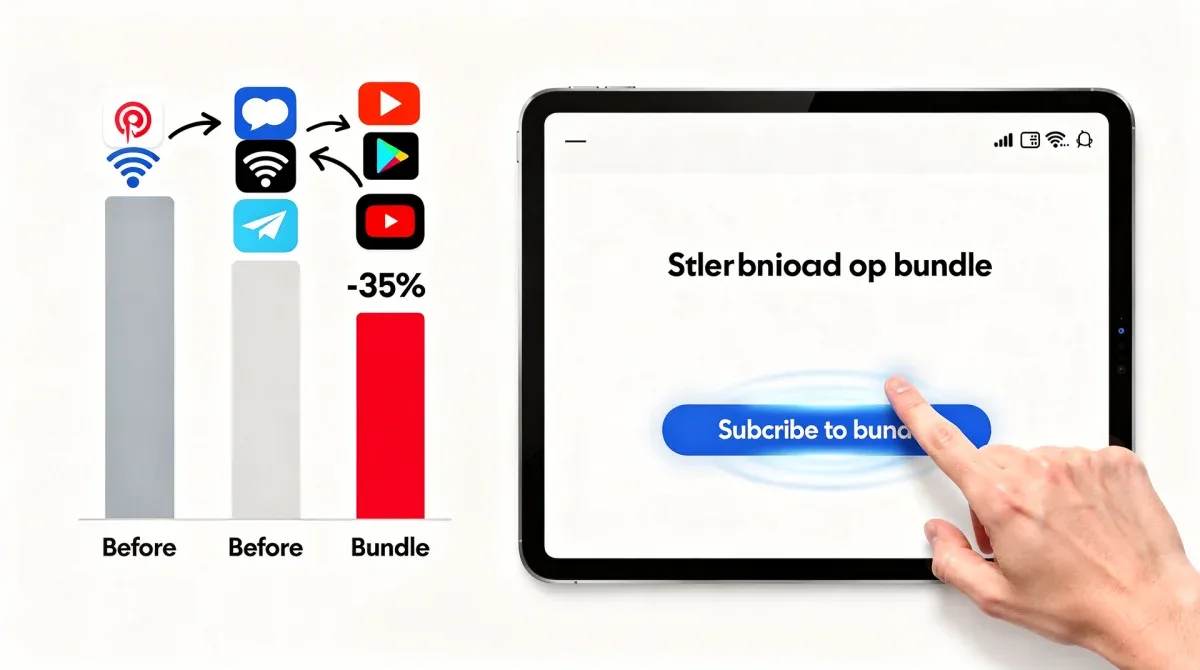
Entertainment providers can use discounted packages to attract subscribers, encourage continued participation, and distribute customer acquisition expenses across multiple services included within a subscription arrangement.
For consumers, the primary financial advantage comes from paying less for a combination of services they would otherwise maintain as separate monthly subscriptions.
However, the advertised savings associated with 2026 Streaming Bundles only represent meaningful financial benefits when households actually need and regularly use the included platforms.
Key Drivers for Bundle Adoption
Managing numerous entertainment subscriptions can become inconvenient when households need to monitor separate renewal dates, payment methods, subscription conditions, and changes in service pricing.
Bundled arrangements may simplify selected billing responsibilities while offering access to a broader combination of entertainment services at a potentially more affordable monthly price.
These practical advantages explain why subscription consolidation remains relevant for consumers seeking greater convenience and more predictable management of their household entertainment expenses.
Major Streaming Bundles Available in the United States
Several established entertainment companies offer subscription arrangements combining popular streaming services, providing American households with options beyond purchasing every platform as an individual subscription.
Available packages differ according to their included services, advertising conditions, streaming capabilities, content restrictions, and the subscription prices charged through participating billing providers.
Comparing actual 2026 Streaming Bundles helps consumers evaluate realistic savings rather than relying on generalized projections about the future affordability of digital entertainment.
Disney+, Hulu, and HBO Max With Ads
The advertising-supported combination of Disney+, Hulu, and HBO Max provides access to three major entertainment platforms through a discounted direct-billed monthly subscription arrangement.
According to the official Disney+, Hulu, and HBO Max bundle offer, the package costs $21.99 monthly, compared with $35.97 for equivalent standalone subscriptions.
This represents monthly savings of $13.98, making the package a practical consideration for viewers who already maintain or regularly use all three included streaming services.
Disney+, Hulu, and HBO Max Without Ads
The higher-priced Disney+, Hulu, and HBO Max package combines Disney+ Premium, Hulu Premium, and HBO Max Standard through an alternative subscription arrangement.
The advertised monthly price is $34.99, compared with $61.47 for equivalent individual subscriptions, providing potential savings of $26.48 each month before applicable taxes.
This option illustrates how selected 2026 Streaming Bundles can provide considerable savings for households that prefer entertainment experiences with fewer conventional advertising interruptions.
Apple TV and Peacock Premium Bundle
Apple TV and Peacock provide a bundled subscription option combining their entertainment libraries, offering access to original programming, television series, movies, and selected live content.
Following pricing changes effective September 1, 2026, the Apple TV and Peacock Premium bundle is available for $17.99 per month under applicable subscription conditions.
This combination may appeal to viewers interested in both platforms, although potential savings should be evaluated against their current individual subscription arrangements and promotional prices.
Apple TV and Peacock Premium Plus Bundle
The Apple TV and Peacock Premium Plus combination provides an alternative package for households preferring Peacock's higher subscription tier and its additional supported features.
Its monthly price increased to $22.99 beginning September 1, 2026, illustrating how established streaming bundles can experience price adjustments following their initial market introduction.
When comparing 2026 Streaming Bundles, consumers should review the latest subscription conditions instead of relying on introductory prices that may no longer remain available.
How Streaming Bundles Can Reduce Subscription Costs by 35%
Evaluating streaming subscription savings requires comparing the combined cost of equivalent standalone services with the amount charged for accessing those services through a bundled arrangement.
The resulting percentage depends on individual subscription prices, included service tiers, promotional discounts, and whether the comparison reflects services households would otherwise purchase separately.
Some 2026 Streaming Bundles exceed the illustrative 35% savings benchmark, although this figure does not represent a guaranteed reduction across the entire entertainment industry.
Calculating Percentage Savings Correctly
To calculate subscription savings, subtract the monthly bundle price from the combined standalone subscription cost and divide the difference by the original standalone cost.
For example, reducing combined monthly subscription expenses from $40 to $26 produces savings of $14, equivalent to a 35% reduction in entertainment spending.
This straightforward calculation allows households to compare different subscription arrangements according to actual financial benefits rather than relying exclusively on promotional descriptions.
Real Savings From Advertising-Supported Packages
The advertising-supported Disney+, Hulu, and HBO Max package provides a concrete example of subscription savings exceeding the illustrative 35% benchmark when compared with equivalent standalone plans.
Its $13.98 monthly price difference represents approximately 38.9% savings mathematically, while the participating providers advertise savings of 38% based on their published offer conditions.
If prices remain unchanged for twelve months, the same package could produce annual savings of $167.76 compared with maintaining the three equivalent standalone subscriptions.
Real Savings From Premium Subscription Packages
The higher-tier Disney+, Hulu, and HBO Max package provides advertised monthly savings of $26.48 when compared with the regular combined prices of equivalent individual subscriptions.
Over twelve months, maintaining the same price difference would produce potential annual savings of $317.76, assuming subscription prices and eligibility conditions remain unchanged.
These examples demonstrate the financial potential of 2026 Streaming Bundles while emphasizing that future price increases or subscription changes can affect long-term savings.
How the 2026 Streaming Bundles Impact Viewers
Bundled entertainment subscriptions can influence how households distribute their monthly spending, particularly when several family members use different streaming platforms throughout the same billing period.
Access to multiple services through a coordinated purchase may reduce combined entertainment expenses while providing additional opportunities to discover content across different digital platforms.
However, households should evaluate whether the 2026 Streaming Bundles available to them provide meaningful convenience and financial advantages compared with their existing subscription habits.
Navigating the New Subscription Landscape
Consumers should evaluate streaming packages by considering their preferred programming, household viewing patterns, existing subscriptions, and the features associated with each included entertainment service.
A package containing several popular platforms may appear attractive but deliver limited practical value when household members regularly watch content from only one service.
Choosing subscriptions according to actual viewing requirements can help prevent unnecessary entertainment expenses and improve the overall financial value of bundled streaming arrangements.
Understanding Subscription Fatigue
Subscription fatigue can arise when consumers become overwhelmed by recurring entertainment expenses, fragmented content libraries, numerous account credentials, and the administrative responsibilities of managing multiple subscriptions.
Bundled services may simplify selected aspects of subscription management, although households still need to understand renewal policies, access arrangements, and cancellation procedures.
The practical appeal of 2026 Streaming Bundles therefore depends on whether they genuinely reduce financial and administrative responsibilities rather than simply increasing available content.
Simplifying Household Entertainment Budgets
Establishing a monthly entertainment budget helps households determine how much they can reasonably spend on streaming subscriptions without compromising other essential financial responsibilities.
Combining frequently used services through an appropriate bundle can make entertainment expenses easier to track, particularly when replacing multiple independently billed subscriptions.
Regularly reviewing subscription statements also helps identify duplicate charges, unused services, and pricing changes that could reduce the expected financial benefits of a bundle.
Major Players and Their Strategies for 2026 Streaming Bundles
Entertainment companies use subscription bundles to broaden their commercial offerings, strengthen subscriber relationships, and provide alternatives to maintaining several separate streaming subscriptions.
Companies associated with Disney+, Hulu, HBO Max, Peacock, and Apple TV demonstrate how partnerships can combine established entertainment services within coordinated subscription arrangements.
The continued development of 2026 Streaming Bundles reflects competition among entertainment providers seeking to offer attractive combinations of content, convenience, and subscription pricing.
Bundle Configurations for Different Audiences
Different subscription packages may appeal to families, movie enthusiasts, television viewers, sports audiences, and households seeking entertainment options that accommodate several individual viewing preferences.
Some packages emphasize films and television series, while others incorporate additional sports programming or specialized content that may require different subscription tiers.
Consumers should examine the specific content and features included in each package rather than assuming every bundled arrangement provides comprehensive access to all entertainment categories.
Sports Programming and Additional Subscription Costs
Sports-related streaming subscriptions can introduce additional complexity because access to particular events depends on broadcasting rights, service tiers, geographic restrictions, and applicable package conditions.
Some entertainment bundles include selected sports programming, while others require additional subscriptions or upgrades to access more comprehensive coverage of particular sporting competitions.
Before purchasing 2026 Streaming Bundles for sports viewing, consumers should verify whether their preferred leagues, teams, and events are included within the selected subscription.
Advertising-Supported and Premium Subscription Strategies
Advertising-supported packages generally offer lower subscription prices in exchange for displaying commercial messages during eligible entertainment programming and other content available through participating services.
Higher subscription tiers may reduce conventional advertising interruptions, although selected live programming, promotional content, and particular entertainment categories can still contain advertising.
Consumers should compare both financial savings and viewing preferences when deciding whether an advertising-supported arrangement or a higher-priced premium package offers greater practical value.
Technological Backbone of 2026 Streaming Bundles
Streaming subscription arrangements rely on technical systems responsible for authentication, payment processing, content delivery, account management, and communication between participating entertainment service providers.
Effective coordination between these systems can help subscribers activate included services, access available entertainment, and manage billing through the appropriate subscription provider.
However, 2026 Streaming Bundles do not necessarily provide a completely unified interface because participating platforms may continue using separate applications and technical infrastructure.
Ensuring a Unified User Experience
Some entertainment providers integrate selected programming from associated streaming services into their applications, creating additional opportunities for users to discover content without immediately switching platforms.
Nevertheless, viewers may still need separate applications, account activation procedures, or individual service credentials to access complete content libraries and supported subscription features.
Before subscribing, households should confirm how their preferred entertainment platforms can be accessed and whether the bundle provides the level of integration they expect.
Artificial Intelligence and Content Recommendations
Streaming companies can use artificial intelligence and machine learning technologies to organize recommendations, identify viewing preferences, and support content discovery within individual entertainment platforms.
These systems may help audiences discover relevant television series, films, or documentaries based on their previous viewing activities and other information available to participating providers.
However, integrated recommendations across all services included in 2026 Streaming Bundles depend on technical arrangements, data sharing permissions, and the capabilities of individual platforms.
Account Activation and Device Compatibility
Subscribers purchasing a streaming bundle may need to activate participating services individually, particularly when the package includes entertainment platforms operated through different applications.
Compatibility with smart televisions, streaming devices, smartphones, computers, and gaming consoles depends on the technical requirements and supported features of each included service.
Checking device compatibility before subscribing can help prevent situations where a financially attractive package fails to meet the household's practical entertainment requirements.
Potential Challenges for 2026 Streaming Bundles
Although discounted packages can provide meaningful financial advantages, consumers should consider potential limitations involving subscription conditions, available content, account management, and future price changes.
Entertainment providers may modify their packages, change subscription prices, adjust content availability, or introduce new eligibility requirements during the course of an existing subscription arrangement.
Evaluating these limitations helps households use 2026 Streaming Bundles without assuming that current prices, included entertainment libraries, or subscription features will remain permanently unchanged.
Maintaining Brand Identity and Exclusivity
Streaming services frequently maintain distinctive entertainment libraries, exclusive programming, recommendation systems, and subscription features even when participating in coordinated musical or audiovisual entertainment packages.
Bundle arrangements do not necessarily transfer every available title into a single application because content distribution remains subject to individual licensing agreements and platform arrangements.
Understanding these differences allows viewers to evaluate the actual accessibility of preferred programming before replacing existing entertainment subscriptions with a combined service package.
Understanding Content Licensing Restrictions
Entertainment libraries can change when distribution agreements expire, production companies modify licensing arrangements, or streaming platforms adjust their strategies for acquiring and presenting particular programs.
Sports programming may also be subject to regional blackouts, event-specific restrictions, and contractual arrangements that affect which subscribers can access particular live broadcasts.
Consumers comparing 2026 Streaming Bundles should verify important content availability rather than assuming that every included service guarantees permanent access to its current entertainment library.
Recognizing the Risk of Future Price Increases
Streaming subscription prices may increase because of commercial decisions, licensing expenses, changes in available programming, and adjustments to the features included within individual service tiers.
The 2026 Apple TV and Peacock bundle price increases demonstrate why consumers should evaluate subscription arrangements using current information instead of relying on original promotional prices.
Maintaining flexibility within an entertainment budget can help households respond to future changes without automatically continuing subscriptions that no longer provide sufficient financial value.
Avoiding Duplicate Subscription Charges
Switching to a streaming bundle does not necessarily cancel every existing standalone subscription, particularly when those services are billed through separate third-party providers or accounts.
Subscribers should review existing payment arrangements and confirm whether individual services must be canceled, transferred, or connected to the newly purchased entertainment package.
Checking subsequent billing statements helps ensure that 2026 Streaming Bundles deliver their expected financial benefits without creating unnecessary overlapping charges for equivalent subscription services.
How to Choose the Best Streaming Bundle for Your Household
Selecting an appropriate entertainment package requires evaluating existing viewing habits, household preferences, monthly subscription expenses, and the individual features available through each participating streaming service.
A lower advertised bundle price does not automatically represent better value when the included platforms provide little relevant programming for the household's actual entertainment interests.
Comparing 2026 Streaming Bundles according to practical requirements helps consumers identify suitable packages instead of purchasing additional services solely because they are offered at discounted prices.
Step 1: Review Existing Entertainment Subscriptions
Begin by identifying every active streaming subscription, its monthly or annual price, renewal date, advertising conditions, and the billing provider responsible for processing payments.
Review which services household members use regularly and identify subscriptions that remain active despite receiving little meaningful attention during ordinary entertainment activities.
This initial assessment establishes a realistic spending baseline against which potential streaming bundle savings can be calculated using comparable service tiers and subscription periods.
Step 2: Compare Equivalent Subscription Tiers
When comparing standalone subscriptions with bundled prices, ensure that the included plans offer equivalent advertising conditions, video quality, download capabilities, and relevant streaming features.
Comparing a lower-tier bundled service with a higher-tier standalone subscription may exaggerate potential savings while concealing differences that could matter to individual household members.
Accurate financial comparisons are particularly important for 2026 Streaming Bundles because participating services may offer multiple subscription levels with distinct prices and technical capabilities.
Step 3: Evaluate Content and Viewing Preferences
Identify the television series, films, documentaries, sports programming, and other entertainment categories most frequently watched by members of your household throughout a typical month.
Review whether potential bundles provide access to relevant programming and whether any additional subscriptions would still be required to satisfy important entertainment preferences.
A package offering fewer but frequently used services can provide greater practical value than a larger combination containing numerous platforms that household members rarely use.
Step 4: Review Cancellation and Renewal Conditions
Before subscribing, examine renewal arrangements, billing responsibilities, cancellation procedures, eligibility restrictions, and any promotional conditions that could influence the package's total ongoing cost.
Annual subscriptions may require upfront payments, while monthly billing arrangements can provide greater flexibility for households that expect their entertainment preferences to change.
Understanding these conditions helps consumers manage 2026 Streaming Bundles according to their financial circumstances without overlooking important restrictions associated with particular subscription arrangements.
Streaming Bundles Versus Subscription Rotation
Subscription rotation involves maintaining selected entertainment services for limited periods, canceling them when their preferred content has been watched, and switching to other platforms.
This approach may offer an alternative to bundled subscriptions for households that do not need continuous access to several entertainment libraries throughout the year.
Comparing subscription rotation with 2026 Streaming Bundles can help consumers identify which strategy delivers better financial value according to their actual viewing habits.
When Streaming Bundles Offer Better Value
Streaming bundles may provide greater financial benefits for households that regularly use several included services and prefer maintaining continuous access to their respective entertainment libraries.
Families with different viewing preferences may particularly benefit when children, adults, and other household members frequently watch programming distributed across several participating entertainment platforms.
In these circumstances, maintaining a discounted package may be more convenient and affordable than purchasing each equivalent streaming service separately throughout the year.
When Subscription Rotation May Save More Money
Households that primarily watch one entertainment platform at a time may spend less by rotating individual subscriptions instead of maintaining continuous access to multiple services.
For example, someone paying $12 monthly for one rotating service would spend less than someone maintaining a $22 monthly bundle, despite the bundle's advertised discount.
This comparison demonstrates why consumers should evaluate absolute monthly spending alongside percentage savings when deciding whether a bundled subscription arrangement suits their entertainment habits.
Managing Privacy and Personal Information Across Streaming Platforms
Entertainment subscription arrangements may involve sharing account information between participating companies to support subscription eligibility, service activation, billing coordination, and other activities described in their policies.
Consumers should review applicable privacy notices to understand how account details, viewing preferences, and other information may be processed across different participating entertainment services.
Understanding these arrangements is particularly relevant when evaluating 2026 Streaming Bundles that combine platforms operated by separate organizations with potentially different data management practices.
Reviewing Account Security Settings
Using strong and distinct passwords for streaming accounts can help reduce unauthorized access when login credentials become exposed through unrelated security incidents or compromised services.
Subscribers should also review connected devices, available account security features, and payment information to identify unauthorized activity or outdated access arrangements.
Maintaining appropriate account security practices can help households manage multiple entertainment services more confidently, regardless of whether they subscribe individually or through coordinated bundles.
Understanding Household Sharing Restrictions
Streaming providers may impose restrictions concerning account sharing, household definitions, simultaneous streaming, geographic access, and the number of devices supported by particular subscription tiers.
These limitations can remain applicable when services are purchased through bundles because individual platforms may retain their respective usage policies and technical restrictions.
Consumers should verify the sharing conditions of 2026 Streaming Bundles before assuming that one subscription arrangement can accommodate every viewer or household member.
The Future Landscape Beyond 2026 Streaming Bundles
The entertainment subscription market continues to evolve as providers explore different commercial partnerships, content distribution arrangements, advertising strategies, and approaches to attracting and retaining audiences.
Future subscription packages may introduce new combinations of services or modify existing arrangements according to changing consumer preferences, commercial conditions, and available entertainment libraries.
Although 2026 Streaming Bundles demonstrate opportunities for discounted access, future developments will depend on provider decisions rather than guaranteed improvements in affordability or convenience.
The Potential for More Entertainment Partnerships
Additional commercial partnerships may allow streaming providers to combine complementary entertainment services, offering consumers different combinations of television programming, films, documentaries, and selected sporting events.
However, establishing these arrangements requires agreement on financial responsibilities, licensing restrictions, customer management procedures, and the technical capabilities necessary to support participating services.
Consumers should distinguish confirmed subscription announcements from speculative industry reports before making purchasing decisions based on anticipated entertainment partnerships or future service configurations.
Future Pricing Models and Subscription Flexibility
Streaming companies may continue experimenting with advertising-supported subscriptions, premium service tiers, annual payment options, specialized content packages, and promotional arrangements targeting different consumer preferences.
These developments could create additional opportunities for savings, although increasingly complex subscription arrangements may also require consumers to evaluate more numerous pricing and eligibility conditions.
Maintaining awareness of available 2026 Streaming Bundles and subsequent pricing changes can help households adapt their entertainment budgets as the subscription market continues evolving.
Key Takeaways for Reducing Entertainment Subscription Costs
Discounted streaming packages can provide meaningful savings when households regularly use the included services and compare subscription prices against equivalent standalone entertainment plans.
Selected available bundles exceed the illustrative 35% savings benchmark, but financial benefits vary according to package selection, viewing patterns, billing methods, and subscription conditions.
The following overview summarizes potential advantages of 2026 Streaming Bundles, with integrated interfaces and individual financial outcomes remaining dependent on the selected service arrangement.
Key Point | Brief Description |
|---|---|
Savings Potential | Viewers can save an estimated 35% on major entertainment subscriptions. |
Combatting Fatigue | Bundles address subscription fatigue by simplifying access and billing. |
Market Impact | Reshapes market competition and consumer content consumption habits. |
User Experience | Focus on unified interfaces and simplified content discovery. |
Frequently Asked Questions About 2026 Streaming Bundles
What exactly are 2026 Streaming Bundles?
Streaming bundles are subscription arrangements combining multiple entertainment services through a coordinated purchase, frequently offering lower prices than equivalent standalone subscriptions. Their features, included platforms, and billing conditions vary according to the selected package.
How much can viewers expect to save with streaming bundles?
Actual savings depend on the selected package and comparison prices. Some major American entertainment bundles advertise savings exceeding 35%, but this percentage is not guaranteed across every available subscription arrangement.
Which major streaming services are included in current bundles?
Available combinations include Disney+, Hulu, and HBO Max, alongside packages combining Apple TV and Peacock. Other arrangements may include sports programming or additional entertainment services depending on provider offerings.
What are the main benefits of subscribing to a streaming bundle?
Potential benefits include lower combined subscription expenses, simplified billing, access to several entertainment libraries, and reduced administrative responsibilities when managing multiple frequently used streaming services.
Are 2026 Streaming Bundles already available?
Yes. Several major entertainment providers offer streaming bundles in the United States. New packages and pricing adjustments may become available as providers modify existing subscription arrangements.
How much does the Disney+, Hulu, and HBO Max bundle cost?
The advertising-supported package is advertised at $21.99 per month, while the higher-tier package is advertised at $34.99 per month. Prices and eligibility conditions may change.
How much can viewers save annually with the Disney+, Hulu, and HBO Max bundle?
Based on published regular monthly price comparisons, potential annual savings are $167.76 for the advertising-supported package and $317.76 for the higher-tier package, assuming unchanged prices for twelve months.
How much does the Apple TV and Peacock bundle cost?
Following changes effective September 1, 2026, the Apple TV and Peacock Premium bundle costs $17.99 monthly, while the Premium Plus combination costs $22.99 monthly under applicable subscription conditions.
Do all streaming bundles provide a single application?
No. Some bundles require subscribers to activate and access included services through separate applications. Integrated content availability and account management features depend on the arrangements established by participating providers.
Can advertising appear in premium streaming bundles?
Yes. Selected live programming, promotional content, and certain other categories may contain advertising even when included subscription tiers are generally marketed as offering entertainment without conventional advertisements.
Do streaming bundles automatically cancel existing subscriptions?
Not necessarily. Subscribers may need to cancel, transfer, or connect existing accounts depending on their billing arrangements. Reviewing individual subscription statements can help prevent overlapping charges.
Can streaming bundle prices increase?
Yes. Providers may change subscription prices according to applicable terms and notification procedures. Consumers should review current prices and renewal notices before assuming their original subscription costs will remain unchanged.
Are streaming bundles always cheaper than individual subscriptions?
No. Bundles may cost less than purchasing all included services separately, but consumers who regularly use only one platform could spend less by maintaining an individual subscription.
Can streaming bundles include live sports?
Some packages include selected live sports, while others require additional subscriptions or higher service tiers. Event availability, regional restrictions, and blackout conditions should be reviewed before subscribing.
Do streaming bundles require long-term contracts?
Subscription terms vary by provider. Some packages use recurring monthly billing, while other promotional arrangements may involve specific commitment periods or eligibility conditions. Always review the applicable subscription agreement.
Can I share a streaming bundle with people outside my household?
Sharing rules depend on the individual streaming services and subscription plans included in the bundle. Household definitions, geographic restrictions, and simultaneous streaming limitations may continue to apply.
Is the advertised 35% savings a verified industry-wide average?
No universal market average of 35% has been established for this article. The percentage represents an illustrative savings benchmark that certain verified subscription packages can exceed.
How can I choose the best streaming bundle in 2026?
Review existing subscriptions, compare equivalent service tiers, identify preferred content, check device compatibility, and evaluate cancellation policies. Select a package that provides meaningful value according to your household's actual entertainment habits.
Conclusion: Looking Ahead at Streaming Subscription Savings
The 2026 Streaming Bundles available in the United States demonstrate how combined entertainment subscriptions can offer meaningful savings compared with purchasing equivalent services individually.
Although selected packages provide savings exceeding 35%, consumers should consider advertising conditions, content availability, previous subscription arrangements, and future pricing changes before making purchasing decisions.
By regularly reviewing entertainment expenses and choosing subscriptions according to actual viewing preferences, households can maintain greater flexibility while making more informed decisions about digital entertainment.